
AI · Economics · Robots
Robot Pay
The Robots Don’t Need a Paycheck. We Do. *A thought experiment about what happens when production stops distributing purchasing power through human employment.*
Filed in AI
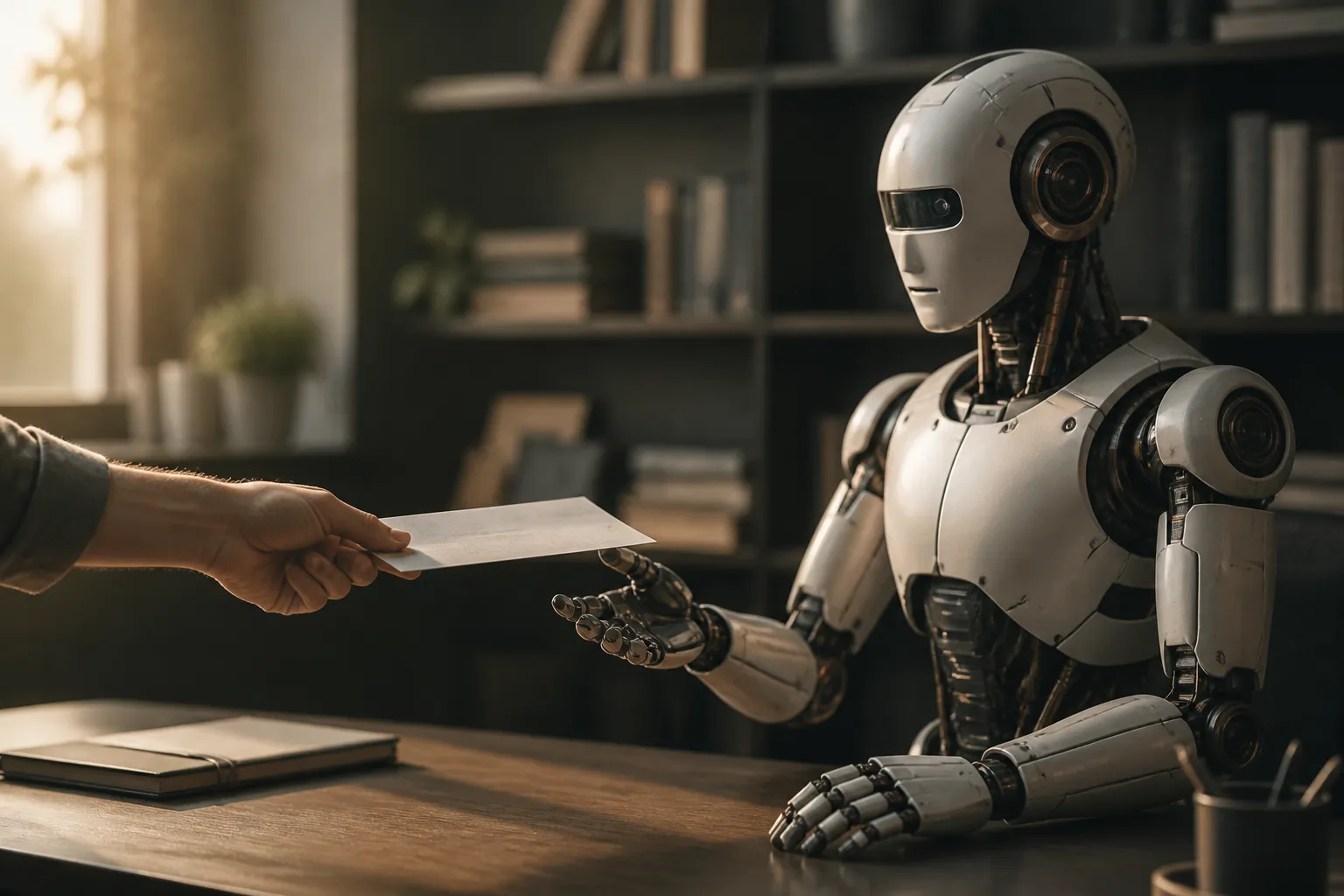
The Robots Don’t Need a Paycheck. We Do.
A thought experiment about what happens when production stops distributing purchasing power through human employment.
I’m an engineer, not an economist. I don’t have a tax plan, and I don’t trust anyone who claims to know exactly what artificial intelligence will do to employment.
But engineers are trained to notice when a system has one component doing two jobs.
In our economy, payroll does two jobs. It compensates the person who worked, and it distributes the purchasing power that allows everyone else to sell what they produce.
What happens if machines gradually take over more of the work?
This is not a prediction that unemployment will reach some spectacular number. It is a question about a possible failure mode. If production keeps rising while wages stop carrying enough purchasing power through the economy, what replaces the wage as the circulation mechanism?
Maybe new kinds of work appear, as they have in previous technological transitions. Maybe people work fewer hours. Maybe ownership broadens. Maybe governments distribute a dividend from the productivity gains. Maybe the whole question is premature.
I don’t know.
But “the market will sort it out” does not answer the underlying question. Markets can decide what to produce. They do not, by themselves, decide how people without bargaining power receive enough income to buy it.
The robots do not need to be paid. The people do.
That is not a solution. It is a question I can’t quite put down.